

Tips for holding tight tolerances in centerless grinding. Q: Do you have any tips for holding tight tolerances in centerless grinding? A: Achieving precise dimensional tolerances in centerless grinding involves...
Read More
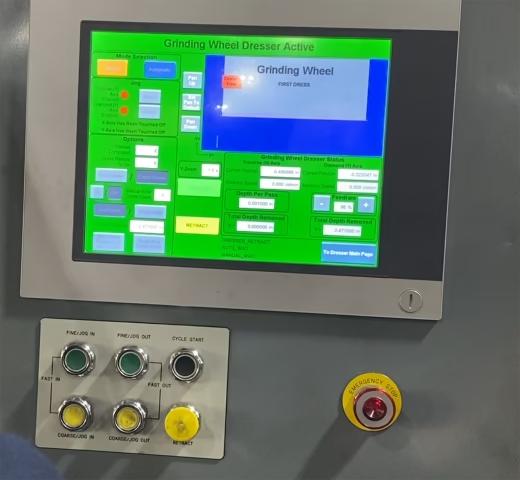
In the centerless grinding industry, maintaining optimal performance is crucial for efficiency and product quality. One common challenge that many manufacturers face is a slow dressing rate of the grinding wheel. “Dressing the wheel” means carefully reshaping and conditioning the grinding wheel’s surface to maintain its proper shape, surface finish, and cutting efficiency. This process involves removing any built-up debris,…
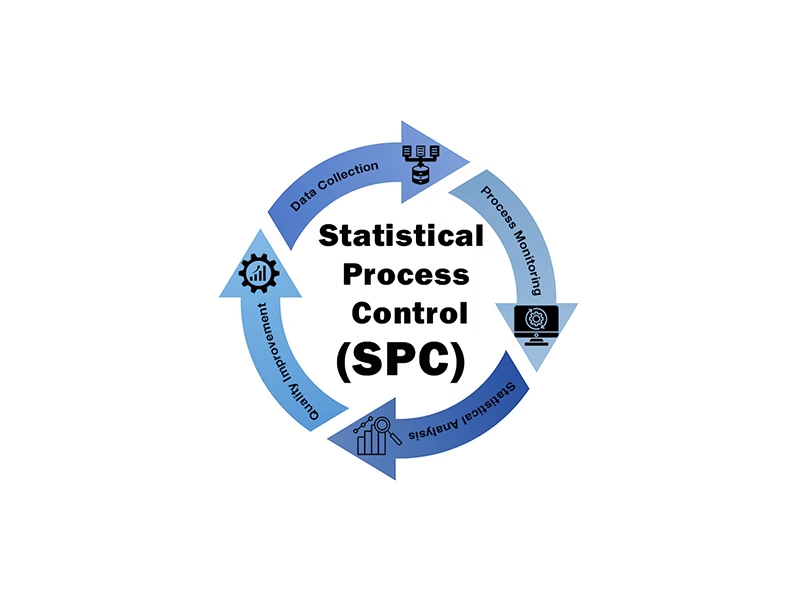
During a recent discovery session with a valued client one of their pain points involved the topic of automation and its impact on quality control. The following questions were high on their list of concerns: How can automated solutions enhance quality in centerless grinding? And, what role does data captured using automated systems play in quality assurance? Typical quality issues…
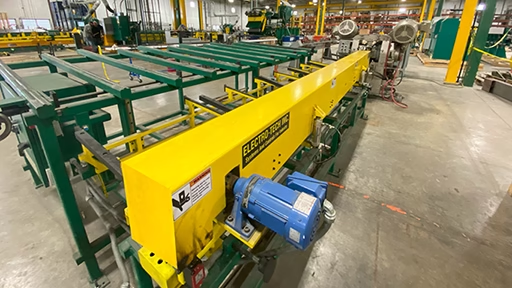
For a long time now, companies have relied on bar straightening machines to remove bends and deformities from metal bars. Attempting to grind a bent bar can lead to several issues, including improper contact with the grinding wheel and regulating wheel. This can cause uneven grinding, vibrations, and even damage to the machine and workpiece. The bent bar may not…

The centerless grinding industry is undergoing significant transformation, primarily driven by technological advancements and evolving market demands. Centerless grinding professionals are grappling with pressing concerns. Notable among these is the pressure to maintain competitive pricing while ensuring high-quality output amid fluctuating material costs and labor challenges. The integration of advanced technologies, such as automation and data analytics, presents both an…

